Hydrotherapy & Rehabilitation
A certified physiotherapy centre. For recovery after surgery and for chronic conditions.
About this specialization
An underwater treadmill gives rehabilitation something that cannot be replaced on dry land. Water supports the body, so a limb can bear weight sooner than it could on the ground, and at the same time it resists every step, so the muscle works even while the joint is still being spared. Water level and belt speed are set for each patient individually, so the load can be dosed precisely and increased only at the pace the patient can handle.
Most often we use it to guide patients back to movement after surgery and injury: after knee procedures, after shoulder or elbow arthroscopy, after complex fractures and after femoral head resection. It helps just as much after neurological procedures — intervertebral disc surgery, cauda equina syndrome, paresis or spinal infarction — where the point is above all to restore coordination and control of the limbs. Where the patient's condition allows, we like to schedule the first visits before a planned operation: the dog gets to know the water and the treadmill calmly, and after surgery rehabilitation is no longer a new situation.
The second large group is long-term conditions, where the aim is not a cure but keeping the patient mobile for as long as possible. In arthrosis and hip or elbow dysplasia, regular exercise in water maintains range of motion, eases stiffness and pain in everyday movement, and helps keep the joint functional for longer. In progressive neurological disease it can preserve motor function for longer.
It doesn't always have to be about illness. Walking against the resistance of water builds strength and stamina without the impact of running on hard ground, which is why we also use it for dogs that compete, work or are preparing for a show — whether building condition before the season or recovering after a demanding performance. We complement it with stability exercises out of the water, so the strength gained shows in everyday movement too.
Hydrotherapy is ruled out, however, by unhealed wounds, acute inflammation or certain heart conditions. The plan is therefore always drawn up and led by a certified physiotherapist.
What it includes
- Underwater treadmill
- Certified physiotherapists
- Post-operative rehabilitation
- Chronic pain management
Gallery
See what it looks like here
Articles on this topic
Frequently asked questions
What is an underwater treadmill and how does it work?
An underwater treadmill is a treadmill submerged in water. The water supports the animal's body while providing resistance, which allows safe muscle strengthening without loading the joints.
Who is hydrotherapy suitable for?
Animals after orthopaedic surgery, with neurological conditions, chronic pain, arthritis or excess weight, and after injuries. It also helps older animals keep their mobility.
How many sessions are needed?
It depends on the diagnosis. Typically 8–12 sessions, 1–3 times a week. After orthopaedic surgery we usually start 10–14 days after the procedure. The plan is tailored individually.
Does my animal need to be able to swim?
No — an underwater treadmill is not a pool. The animal walks on the belt at an adjustable water depth, with the therapist present throughout and in control of the whole process.
How much does hydrotherapy for dogs cost?
The price varies depending on the individual patient and their treatment plan, so we cannot give a single figure. We will gladly prepare an exact quote in person: visit us at Lamačská cesta 53 in Bratislava or call 0907 824 196.
Do you also offer rehabilitation and physiotherapy for dogs?
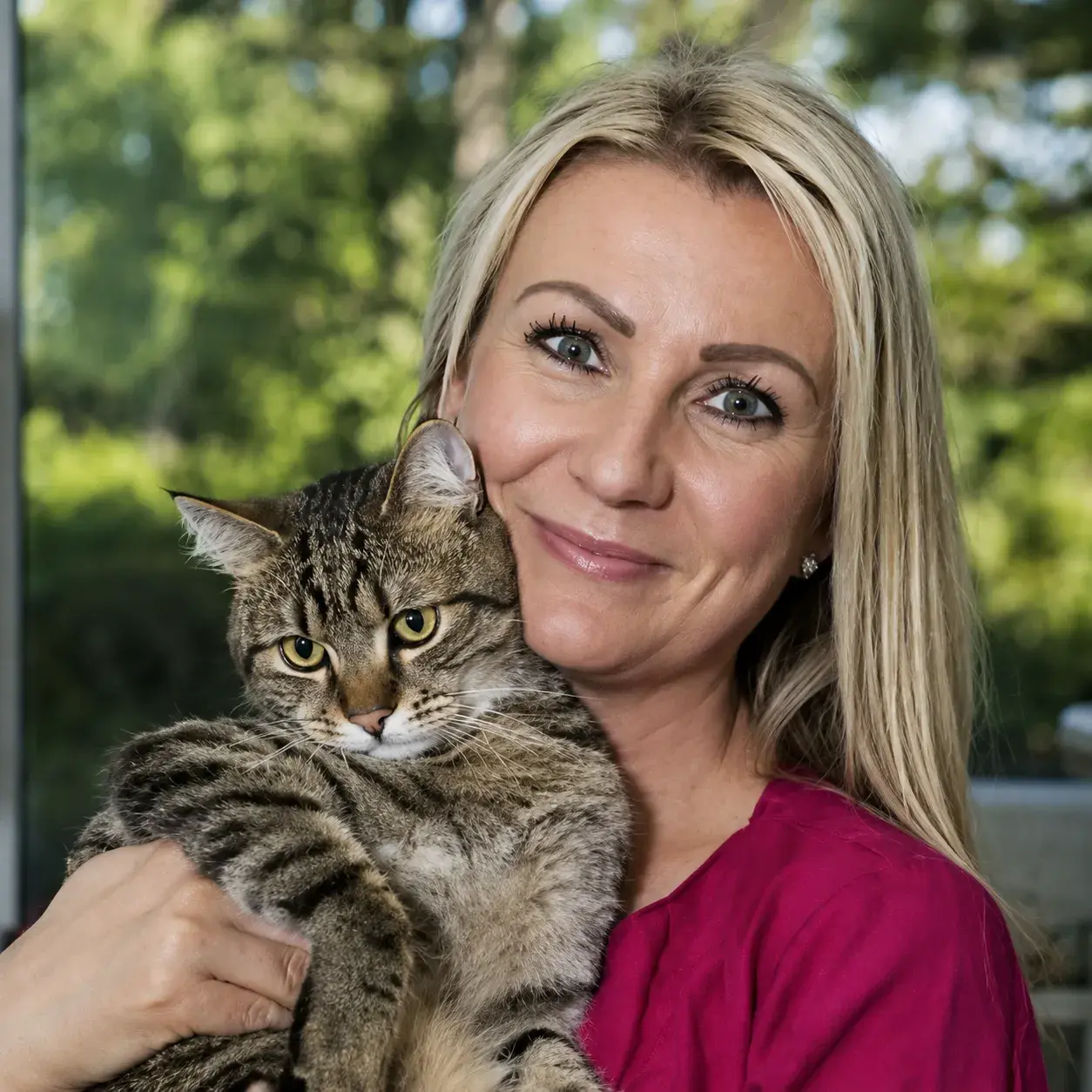
Yes. Our rehabilitation centre is run by a certified physiotherapist, Petra Menclová (CertCAAPR). She prepares a recovery plan for each patient individually: after orthopaedic surgery, for neurological conditions, for older animals, for overweight patients and for sporting dogs.
Book an examination
Call us and we'll schedule an appointment.This area is led by Petra Menclová.