
Cardiology
ECG, echocardiography and chest X-ray. Screening for breeds with an inherited risk of heart disease.
About this specialization
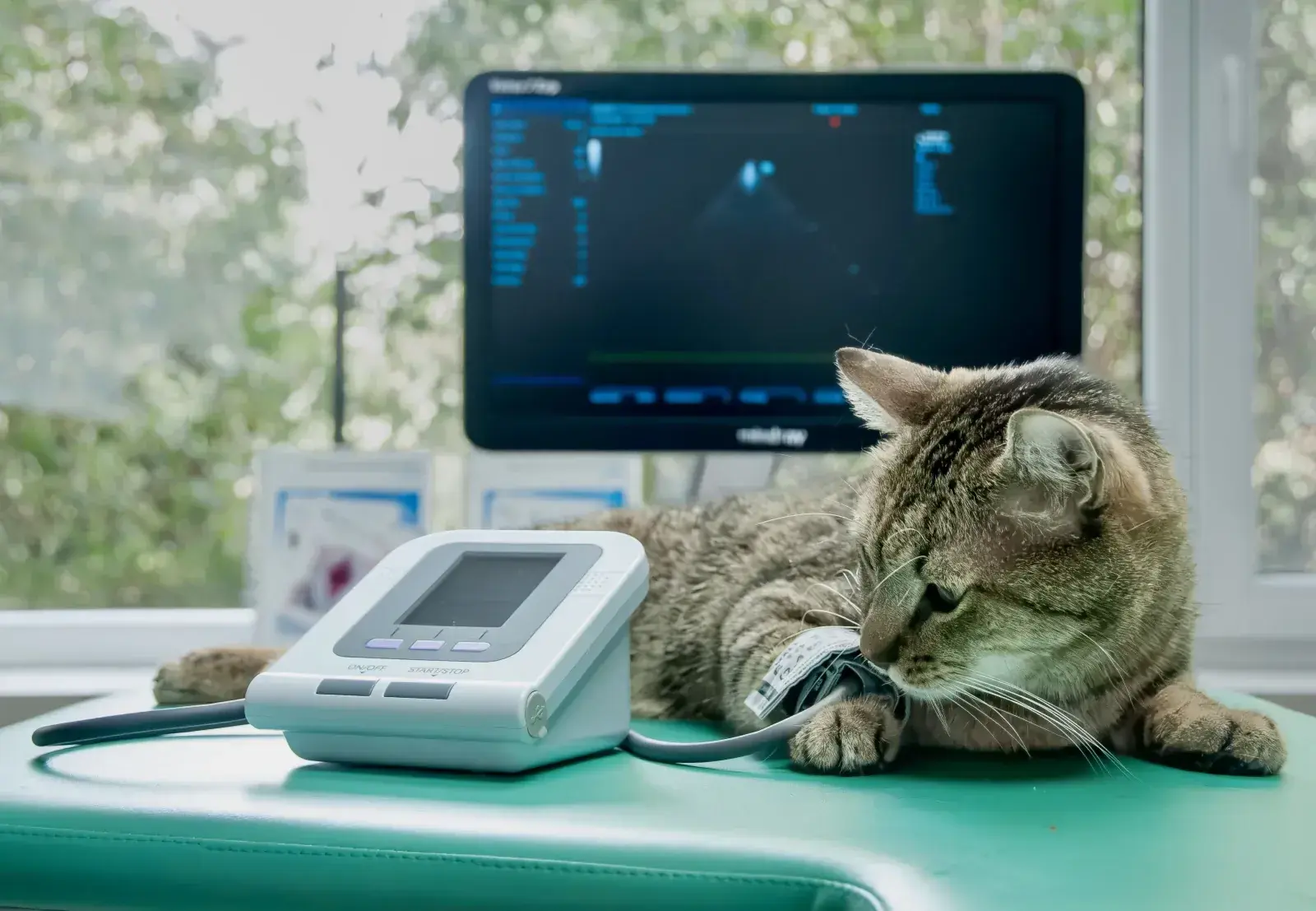
We provide cardiological examinations for dogs and cats. We begin with auscultation of the heart – listening for murmurs and assessing the heart sounds – and, depending on the findings, continue with echocardiography. This ultrasound examination assesses the structure and function of the heart, the heart valves and blood flow in detail.
We add blood pressure measurement, which matters not only in heart disease but also in kidney and other systemic diseases, and laboratory diagnostics covering haematology, biochemistry, electrolytes and inflammatory markers. Cardiac biomarkers such as NT-proBNP are sent to an external laboratory. In patients with heart disease, and when monitoring treatment, we also examine urine and kidney parameters.
A cardiological examination helps us detect heart disease, determine its severity and follow its course and the response to treatment.
What it includes
- Auscultation of the heart: assessing murmurs and heart sounds
- Echocardiography (heart ultrasound): heart structure and function, valves and blood flow
- Blood pressure measurement
- Laboratory diagnostics: haematology, biochemistry, electrolytes, inflammatory markers
- Cardiac biomarkers (NT-proBNP), sent to an external laboratory
- Urine and kidney parameter testing
Gallery
Frequently asked questions
What signs suggest heart disease?
Coughing (especially at night or after exercise), shortness of breath, reluctance to move, fainting, a swollen abdomen. Some heart diseases show no signs for a long time — which is why we recommend regular cardiac screening.
What does a cardiological examination involve?
We start with a clinical examination and listening to the heart. Depending on the findings we add an ECG, echocardiography, a chest X-ray and blood pressure measurement. The examination is painless and in most cases needs no sedation.
Which breeds are most at risk?
In dogs, especially the Cavalier King Charles Spaniel, Dachshund, Dobermann, Boxer and Great Dane; in cats the British Shorthair, Maine Coon and Ragdoll. For these breeds we recommend an earlier first screening, repeated regularly.
Book an examination
Call us and we'll schedule an appointment.This area is led by MVDr. Karin Kang.