My dog is limping — how not to make things worse before seeing the orthopaedic vet
Before a visit to a veterinary orthopaedic specialist it helps to know what to do and what to avoid. Here is our advice.
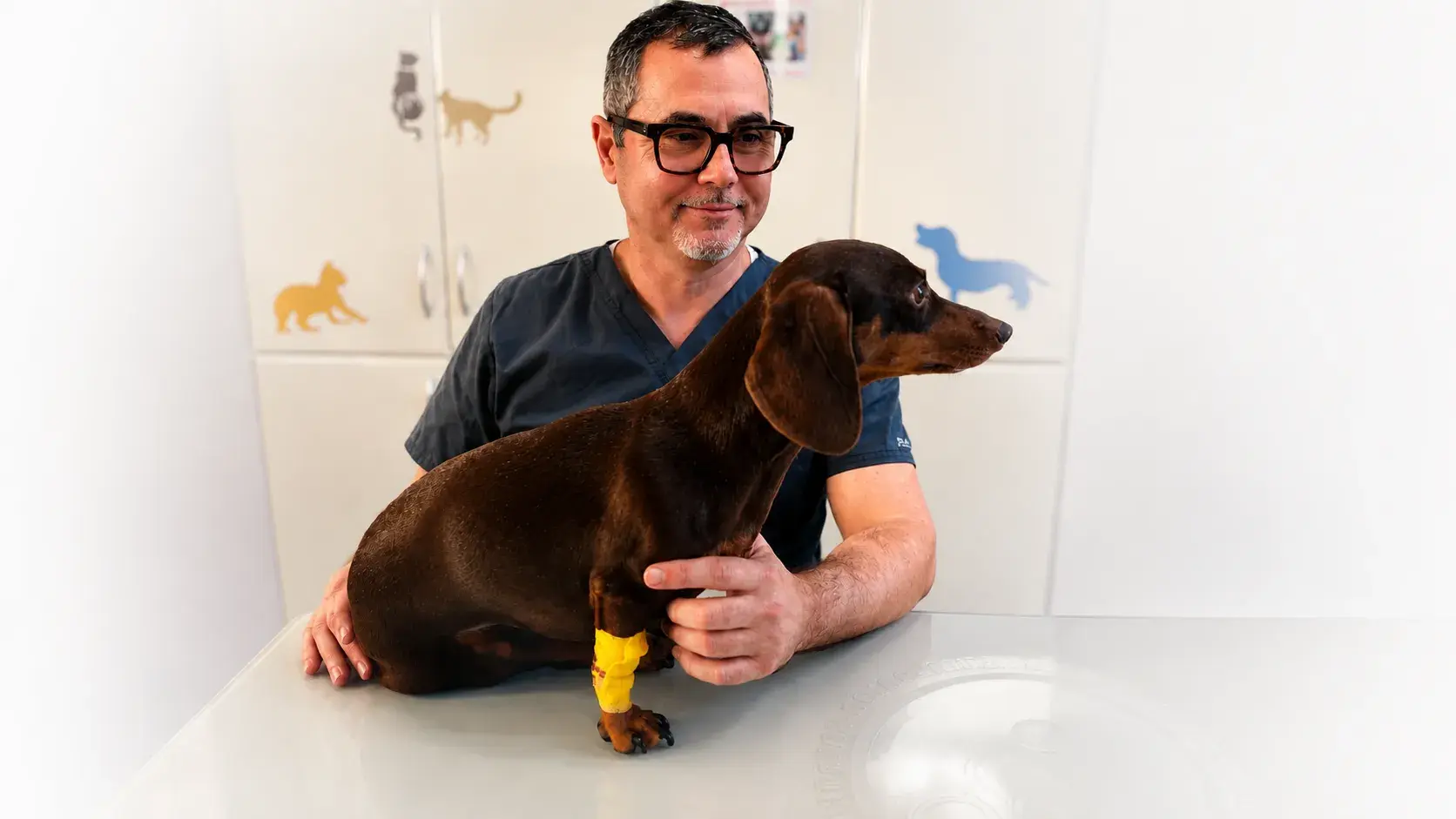
If you notice your dog limping, the first step is to restrict movement and see a veterinary orthopaedic specialist as soon as possible. But take care — there are a few things that can complicate the examination or distort the findings.
What not to do before the visit
Do not give painkillers without a vet's approval — they dull the pain but mask the signs that let us locate the problem
Do not massage or squeeze the affected limb
Restrict movement — no stairs, jumping or long walks
What to watch for and note down
Before the visit, note when the dog limps (after rest, after exercise, or all the time) and which limb. For the hind limbs your attempt to pick the "right" limb will be correct about 90% of the time; for the forelimbs about 50%. A great help is to film your dog on your phone when you suspect lameness — ideally a sequence of about 30 seconds from the side, from behind, and of the dog sitting down and lying down. This information helps us considerably with the diagnosis.
What to expect at our hospital
At BENNETT we use a digital gait lab — the only system of its kind in Slovakia. It objectively measures the load on each limb while walking and reveals even subtle deviations that would otherwise go unnoticed. It is an excellent and irreplaceable way of establishing the percentage load deviation of each paw before and after therapy, and above all the degree and manner of compensation. That is key information for the effect of treatment, and especially for the physiotherapist. If your dog compensates for the primary problem through the load axis on the same side, ipsilaterally, it will unfortunately have more work ahead.
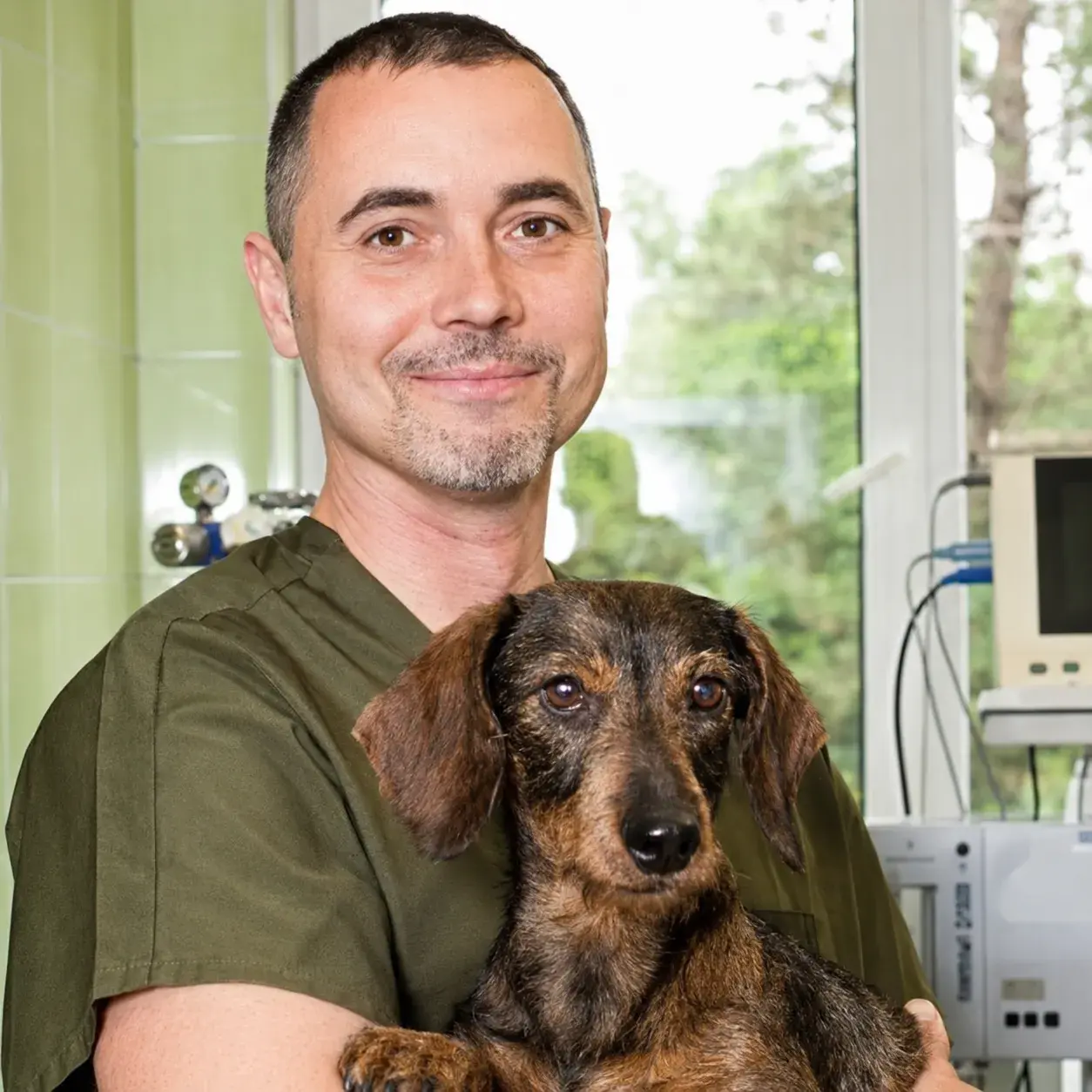
Written by
MVDr. Richard Kapalko
Founder of the clinic & certified surgeon & orthopaedic specialist AdvCertSAOS
Related specialism
Orthopaedics & Lameness Laboratory
Orthopaedics from A to Z, led by certified orthopaedic surgeon MVDr. Richard Kapalko — holder of the international advanced orthopaedic certification AdvCertSAOS, with more than 25 years of specialised practice.