
LAPARO or the so-called conventional spay?
A laparoscopic spay is gentler, safer and less painful than the conventional procedure. See why we recommend it.

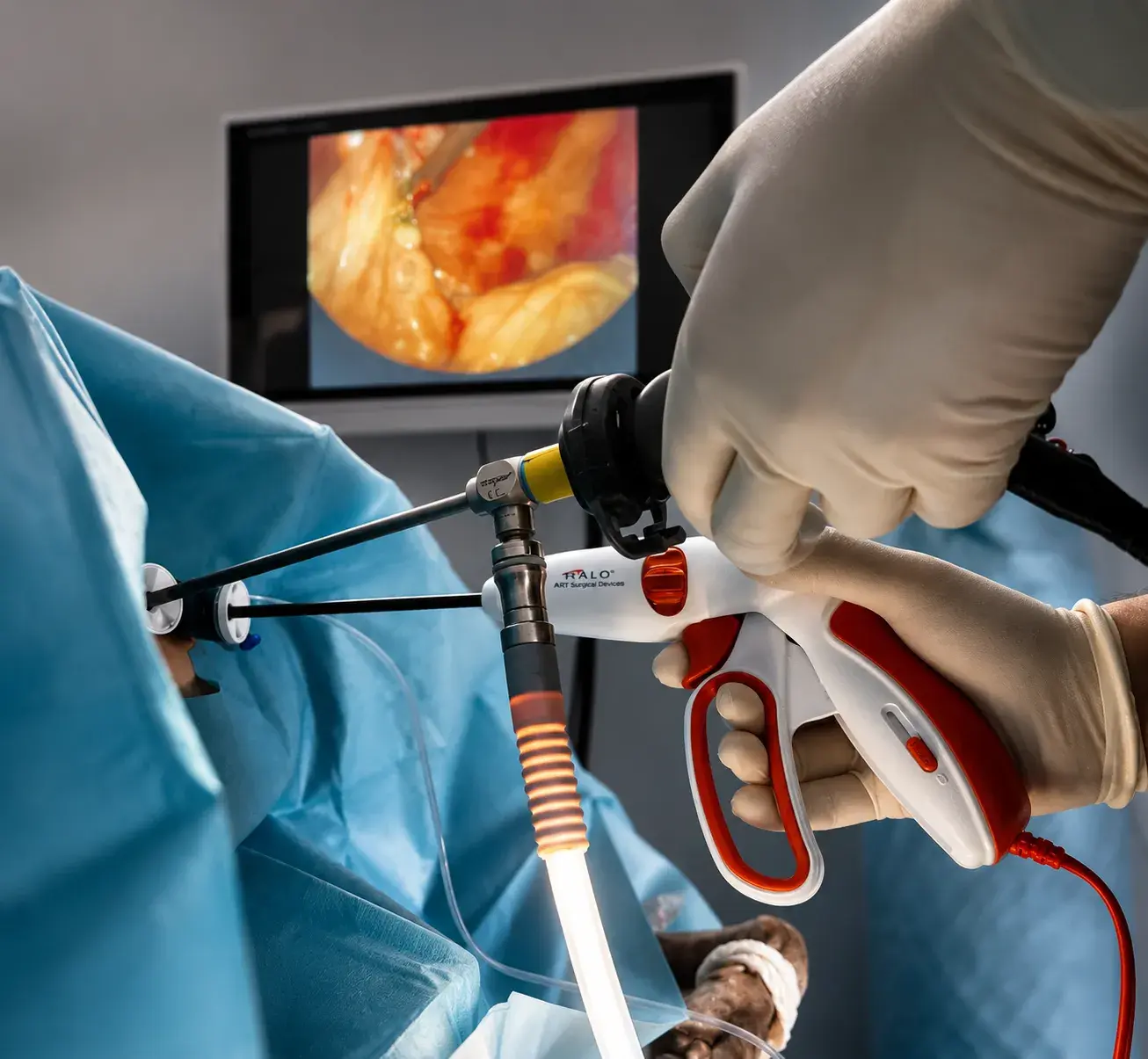
Spaying is one of the most common surgical procedures in small-animal practice. At BENNETT we offer both approaches — the conventional (open) spay and the laparoscopic (LAPARO) spay. How do they differ, and why do we prefer laparoscopy?
The conventional spay
In the conventional approach the surgeon makes an incision in the abdomen, through which the ovaries — or the uterus as well, in a conventional spay — are removed. The procedure is proven by decades of practice and works fully. Its drawbacks are the larger incision, more pain after the procedure and a longer recovery.
The laparoscopic spay
With the LAPARO method the surgeon works through 2–3 small ports (5–10 mm), through which special instruments and a camera are introduced. The advantages are considerable:
60% less pain in the post-operative period
Shorter recovery — the animal returns to normal activity sooner
Smaller wounds — minimal risk of complications
A better view for the surgeon thanks to the camera system
Who is LAPARO suitable for?
A laparoscopic spay is suitable for healthy female dogs and cats of all sizes. Before the procedure we carry out a pre-operative examination including a blood count and biochemistry.
If you have questions or would like an appointment, don't hesitate to contact us.